
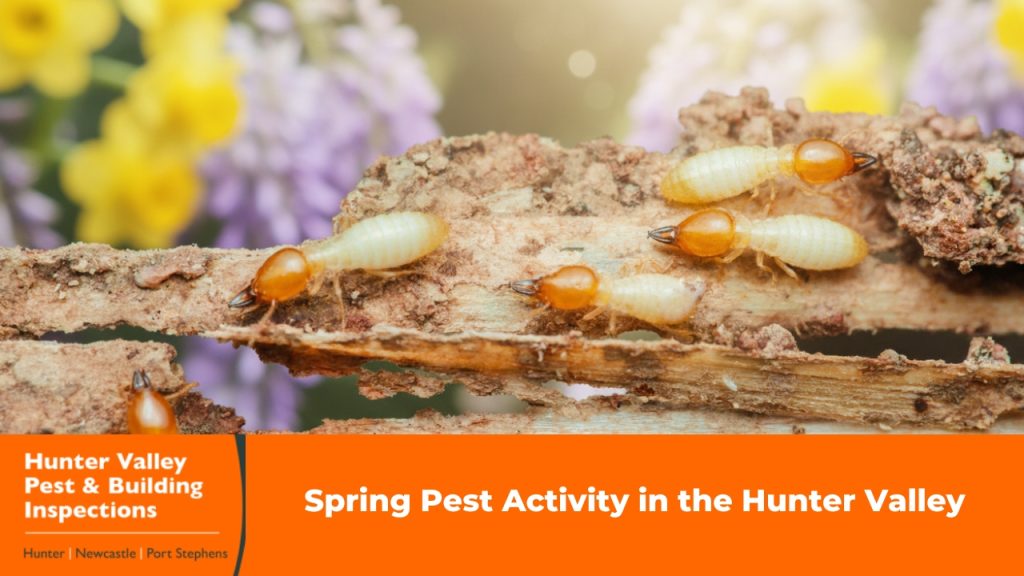
As the weather warms in spring, Hunter Valley residents enjoy blossoming landscapes and longer days, but this season also brings heightened threats from termites, wood borers and timber rot. These timber pests quietly nibble away at your property’s integrity, often causing significant structural damage if left unchecked.
Spring creates the perfect conditions for timber pests to thrive. Warmer temperatures and increased moisture encourage fungal decay and wood rot, attracting termites and wood‑boring pests to vulnerable timber areas.
Understanding how spring influences termite behaviour and early signs of infestation can save homeowners and investors thousands of dollars. Here’s what you need to watch for and how a professional inspection can help.
Why Spring Heightens Timber Pest Risk
Spring boosts moisture levels and humidity. These are ideal conditions for fungal decay and structural weakening. In turn, damaged or damp timber becomes an open invitation to termites and borers.
Additionally, termites are always vigilant in the Hunter Valley. Spring often sees a surge in visible activity, such as discarded termite wings, mud tubes and frass (tiny droppings resembling wood dust).
Key Timber Pest Concerns in Spring
With warmer weather and higher humidity, spring creates the perfect environment for timber pests to thrive. Here are the main threats to watch out for:
Termites
The Hunter Valley is known for its rich soils and leafy surrounds, but these conditions also make it attractive to termites. Spring is swarming season, when winged termites leave their colonies to find new nesting sites.
These pests can quickly settle in and cause damage to timber structures such as frames, decks and fences. A professional timber pest inspection in spring gives you the chance to identify activity early and arrange treatment before it spreads. Common signs of an infestation include hollow sounding timber, mud tubes on foundations or walls, discarded wings and tiny droppings known as frass.
We highly recommend scheduling a timber pest inspection early in the season to detect hidden activity before major damage occurs.
Wood Borers and Dry Rot
Wood boring beetles may not be as conspicuous as termites, but their damage is equally destructive. Early decay and fungal rot, particularly in damp areas, create ideal breeding grounds for timber pests.
Moisture Related Rot
Excessive moisture from leaking pipes, poor ventilation or damp subfloors creates the perfect conditions for fungal decay. This type of rot weakens timber and compromises the structure of a home.
Even more concerning, it attracts termites and other pests that thrive in damp environments. Identifying and fixing these moisture issues during an inspection is one of the most effective ways to protect both the integrity of your property and your investment.
How Timber Pest Inspections Protect Your Property
A professional inspection is your best defence against silent timber threats. Hunter Valley Pest & Building Inspections offers comprehensive timber pest inspections that reveal hidden risks before they become costly problems.
What’s Included in the Inspection:
- Full internal and external checks of walls, floors, ceilings, roof voids, subfloors, garden structures and all accessible timber areas.
- Detection of termite activity (current and past), wood borer damage and signs of fungal decay or dry rot.
- Use of advanced tools such as thermal imaging and moisture meters to uncover concealed damage.
For extra confidence, you may also consider a thermal imaging inspection to detect termites and moisture without disturbing walls or flooring.
Why Book an Inspection This Spring
Early detection is the most effective way to avoid the high costs of repairing pest damage. Identifying an infestation at the start means treatment can be arranged quickly, often before any serious structural harm is done.
Even if no current activity is found, inspections highlight risk factors such as poor drainage, leaking pipes or untreated timber in contact with the soil. Fixing these issues can prevent problems in the future.
Spring Prevention Tips
Maintain your property with these proactive steps:
- Reduce moisture exposure: Check for leaks, improve subfloor ventilation and repair damp areas.
- Ensure good drainage: Keep gutters clear and direct water away from foundations.
- Avoid timber to soil contact: Do not allow untreated timber to rest on or in the ground.
- Stay alert: Look for signs like frass, soft or hollow wood and mud tubes.
Protecting property value
A timber pest inspection is also about peace of mind. If you are selling, having a recent inspection report can make your property more attractive to buyers.
If you are buying, it ensures you know exactly what you are getting into before committing. For owners, it provides reassurance that your investment is safe from one of the most damaging threats faced by Australian homes.
Book Your Spring Timber Pest Inspection
Do not wait until the damage is visible. This spring, take action to safeguard your property.
You can Order an Inspection online or call 0488 885 203 to book a timber pest inspection today.